
The Belgrave story
A short history of Belgrave Harriers, drawn from the much fuller archive kept by Belgrave historian Alan Mead at belgraveharriers.info.
Belgrave Harriers began in 1887 as a group of young friends in a Pimlico pub. Since then it has produced Olympic medallists and won national titles on the track, the road and the country. Its home today is a grand old clubhouse in Wimbledon, but most of the running happens in Battersea Park.
Why "Harriers"? A harrier is a hound bred to chase hares. Victorian running clubs borrowed the name from "hare and hounds" runs, where a couple of runners laid a paper trail across country and the rest of the pack chased them. Belgrave's very first race was run exactly that way.

The Boxing Day sprint on the embankment by Chelsea Bridge, a club tradition from its very first winter. Photo: Alan Mead's archive
1887: Friends from Pimlico
In September 1887 a group of young men from Pimlico watched an athletics meeting at the Oval and asked themselves why they didn't form a club of their own. About two weeks later they met at the King's Arms pub and did just that.
They nearly called it Pimlico Harriers. They chose Belgrave, probably because it suggested a grander slice of London, one that took in Buckingham Palace. The badge borrowed the portcullis from the City of Westminster's coat of arms, and still does.
Their first race, on 22nd October, was a seven-mile paper chase from Wimbledon by way of Roehampton and Putney, with 35 members chasing two "hares" who laid the trail.
1888–1913: Pubs, tin baths and claret and gold
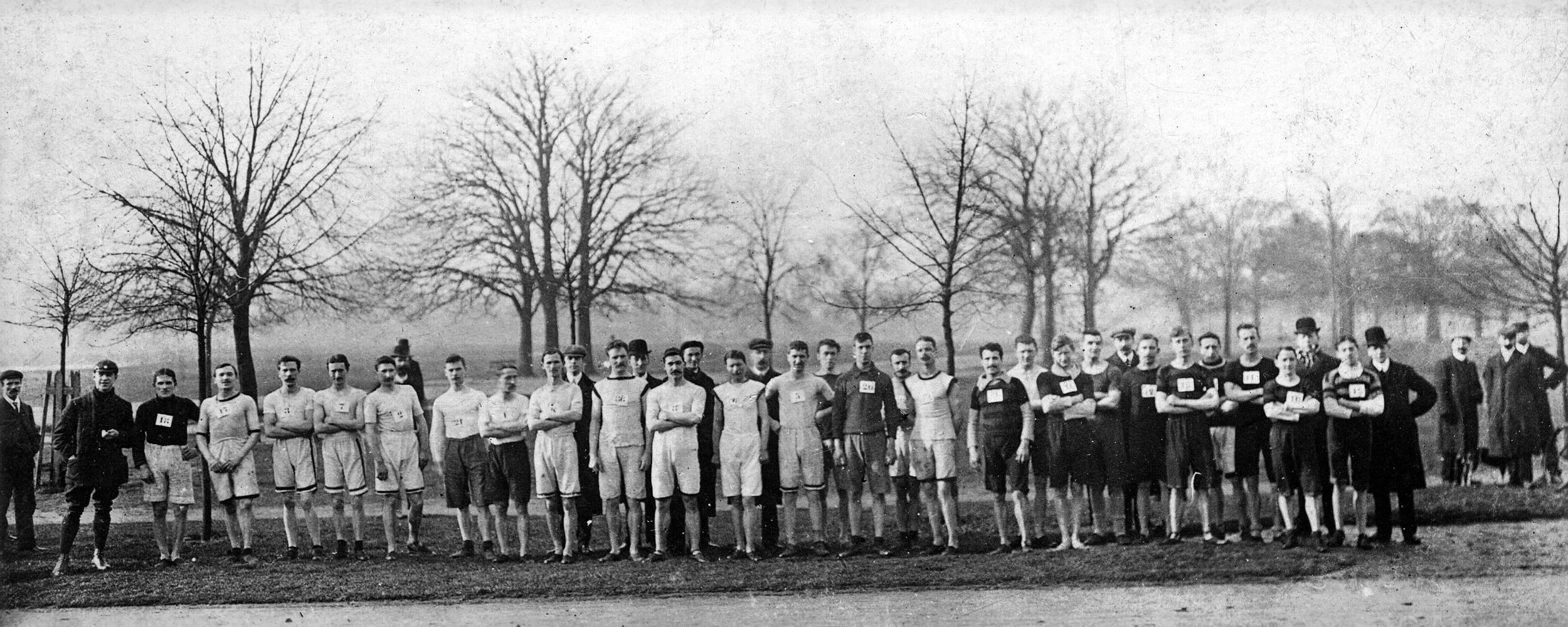
The start of a cross country race on Barnes Common, around 1906. The Belgrave runners stand on the right. Photo: Alan Mead's archive
For most of its first 25 years Belgrave lived in pubs. Members changed in a back room, shared a single tin bath, and raced along the Thames embankment on Wednesday nights, often in near darkness. Their favourite training loop, over Chelsea and Albert bridges and along the edge of Battersea Park, is still run by members today.
The club grew, drifted and lost members more than once. A whisky trophy, a boxing section that became better known than the running, and a string of pub landlords who came and went all play a part in Alan's full story. By 1904 the club had won its first team medals, and its official colours had become claret and gold hoops. The story of the kit has its own page.
1913–1918: A promise, then war
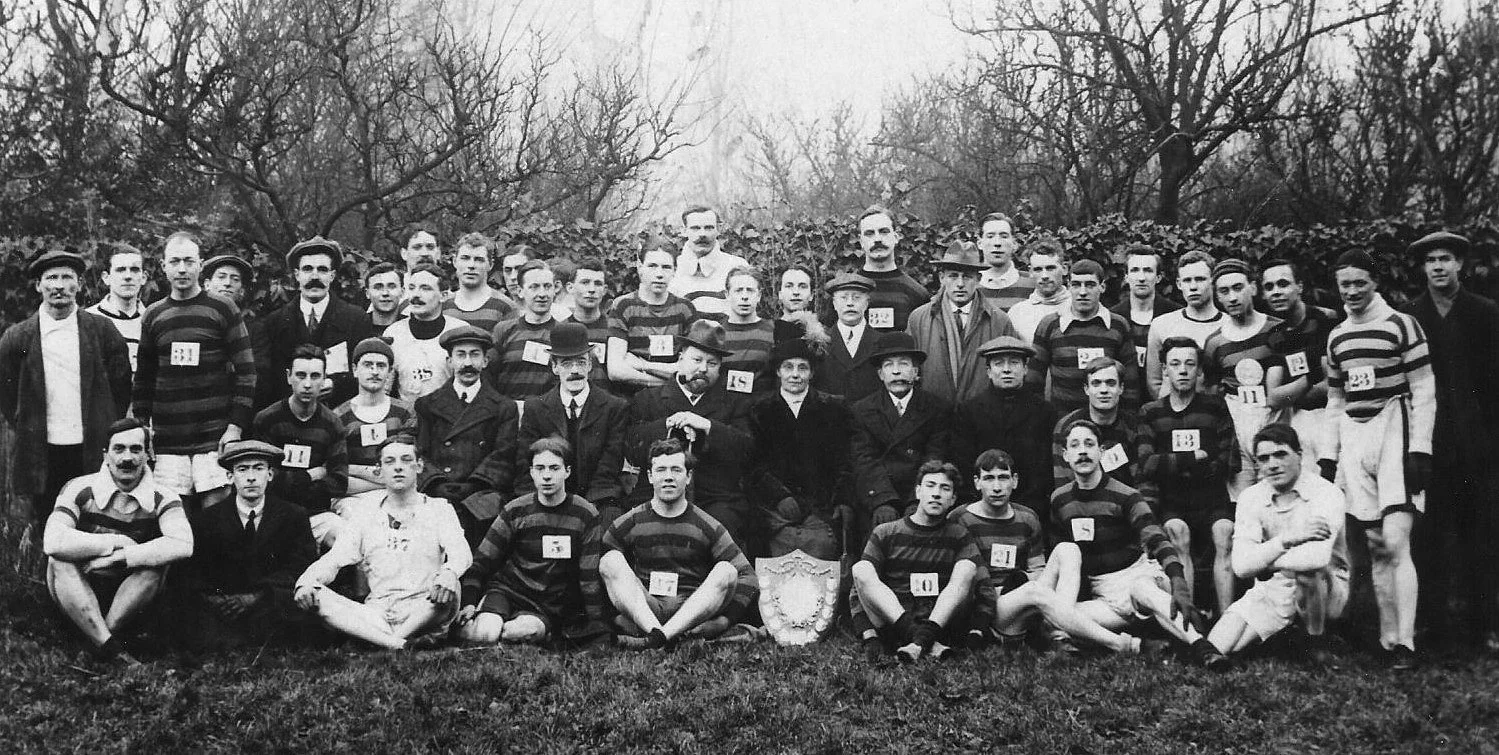
Raynes Park, January 1914. John Helm sits second from right; John Garnett stands ninth from left, at the back. Neither survived the war. Photo: Alan Mead's archive
In 1913 the club was in debt and losing its best athletes to bigger clubs. Its new secretary, Oscar Horwood, asked everyone to stick with it, and predicted that Belgrave would one day win honours never won before.
Then came the First World War. By October 1914 around 50 members, about half the club, were in uniform. At least eight never came home. One was John Garnett, killed on the Somme in 1916. The club's Garnett Cup for the mile and 1500 metres is named after him. Alan keeps the club's Roll of Honour for both world wars.
1930s–1950s: Champions of England
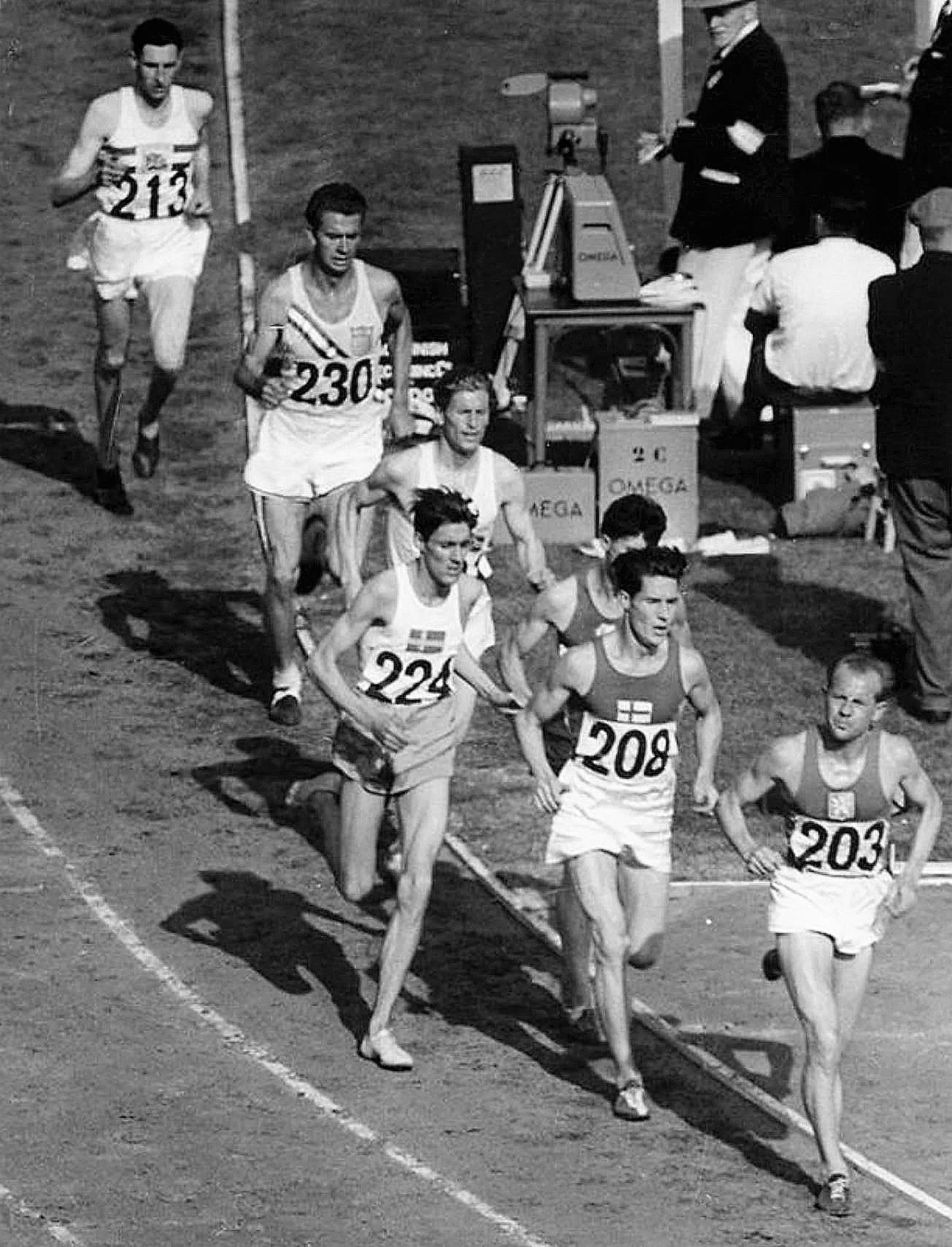
Bill Lucas in the 5,000 metres at the 1948 London Olympics, one of four Belgravians at those Games. Photo: Alan Mead's archive
Horwood lived to see his promise kept. In 1932 the walker Tommy Green won Olympic gold over 50 kilometres. Two years later Belgrave began a run of three straight wins in the London to Brighton relay, and in 1935 the club became English cross country champions for the first time. It won that title again in 1939, 1946 and 1948.
The Second World War cost the club dearly: Alan's Roll of Honour names 23 members who died. But Belgrave came back strong. Four members competed at the 1948 London Olympics, and the club's walkers won the team title in the London to Brighton Walk 22 times between 1921 and 1976.
1976–1992: Women join, and the track team climbs
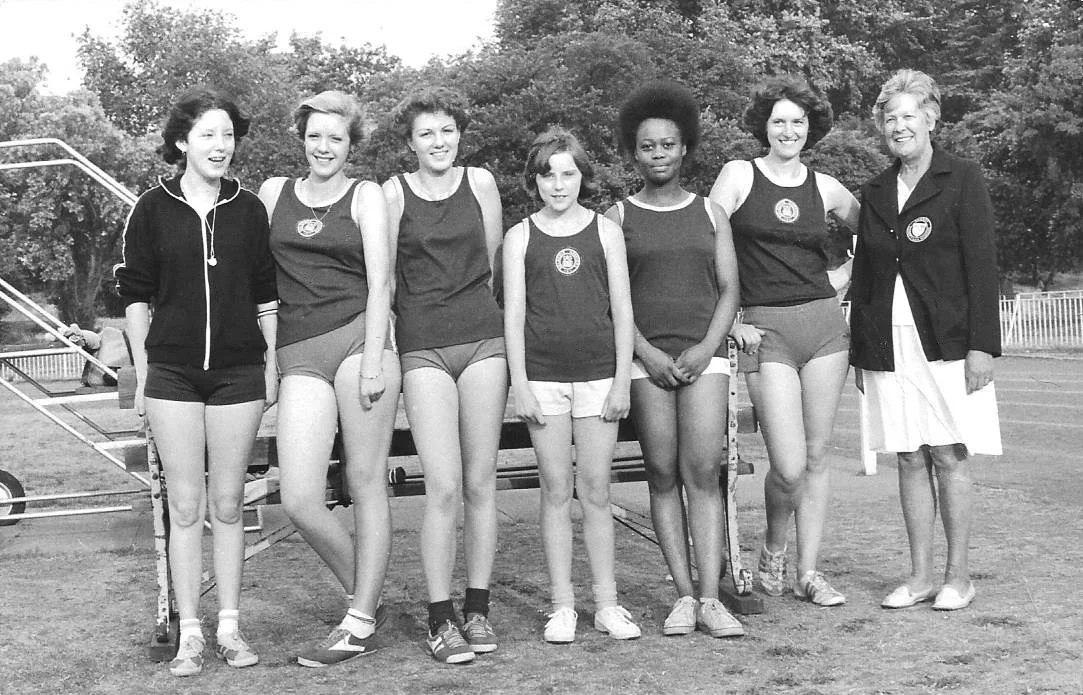
Belgrave's new women's section, 1976. Photo: Alan Mead's archive
In 1976 Belgrave started a women's section, and the club was building a track team to match its runners and walkers. The men climbed the British Athletics League from Division Four in 1983 to the top, and in 1992 they were champions of the whole league, then the leading club competition in the country.
The climb owed much to Eddie Kulukundis, a theatre producer from a Greek shipping family, who became the club's patron in 1986. He was knighted in 1993 for charitable services to sport and the arts.
The club had Olympic medallists again too: the sprinter John Regis won relay silver in 1988 and relay bronze in 1992.
Late 1990s–2013: The golden era
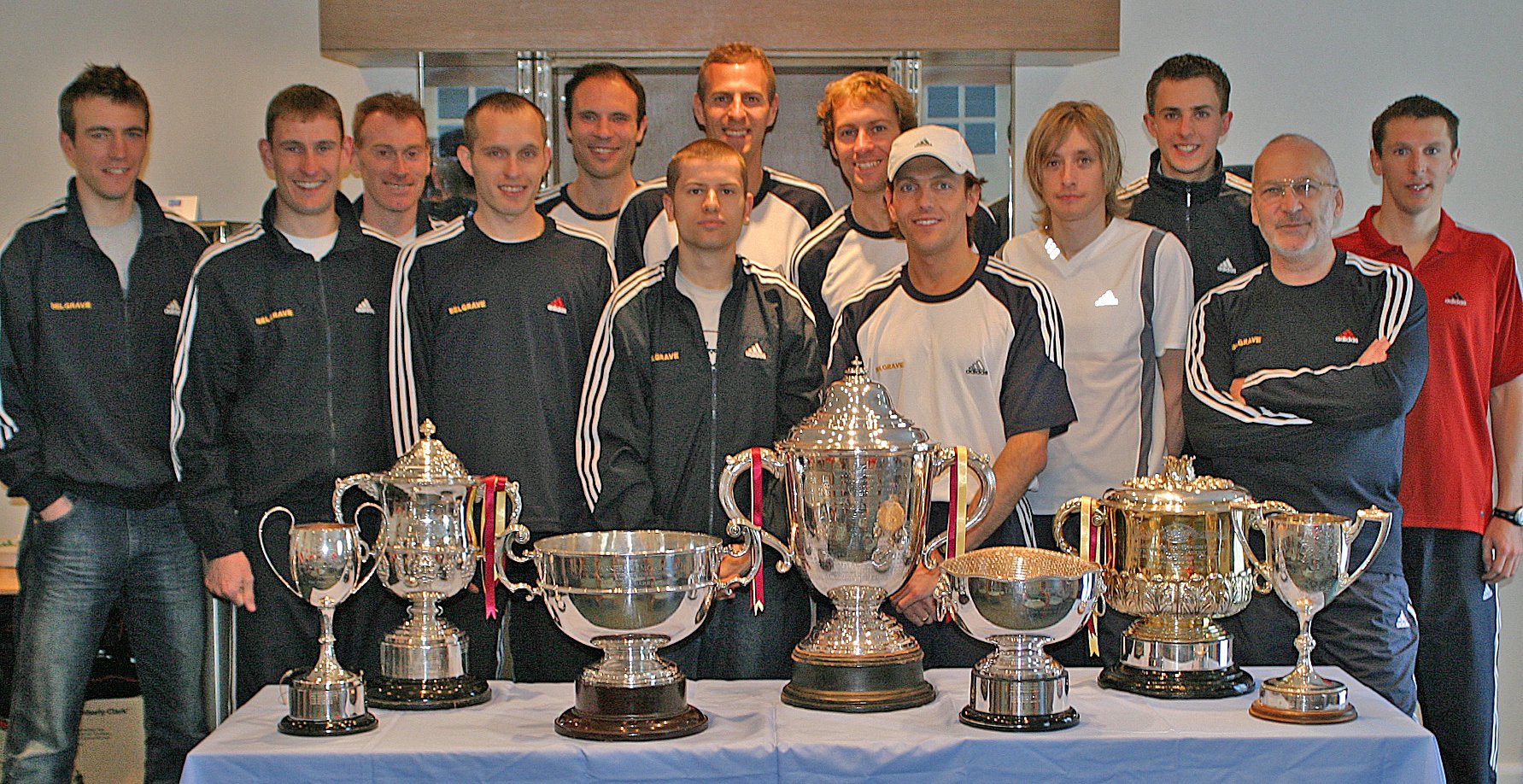
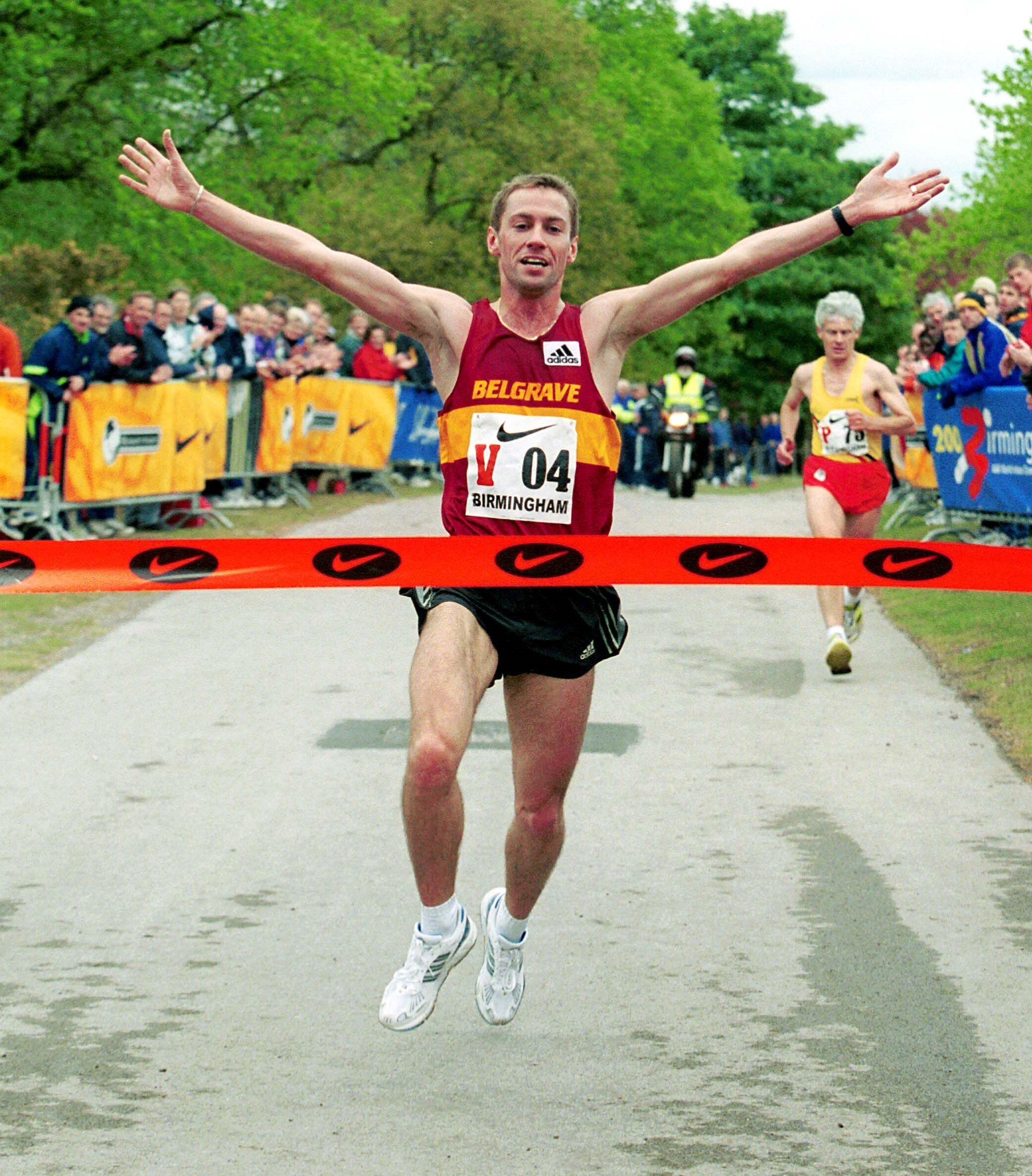
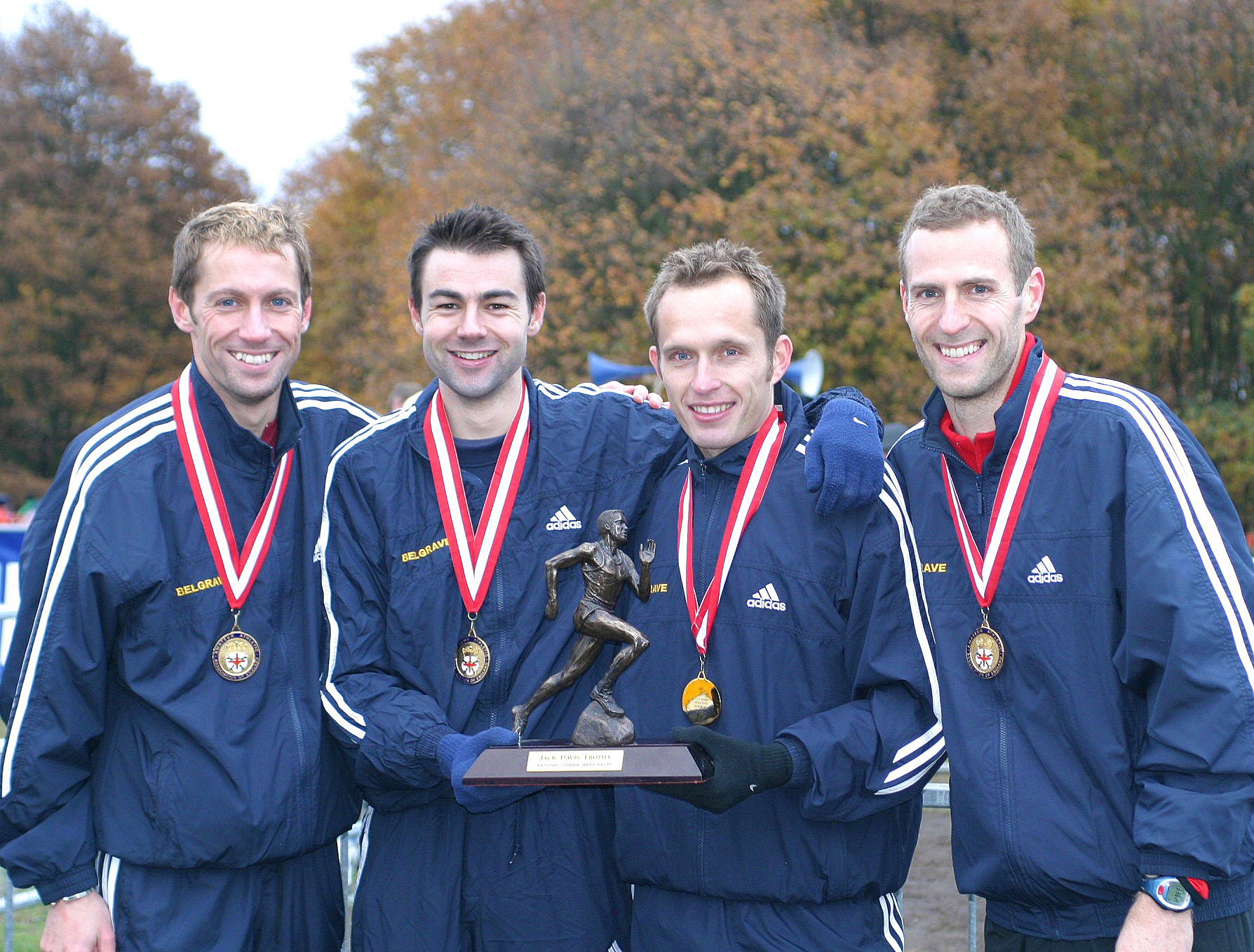
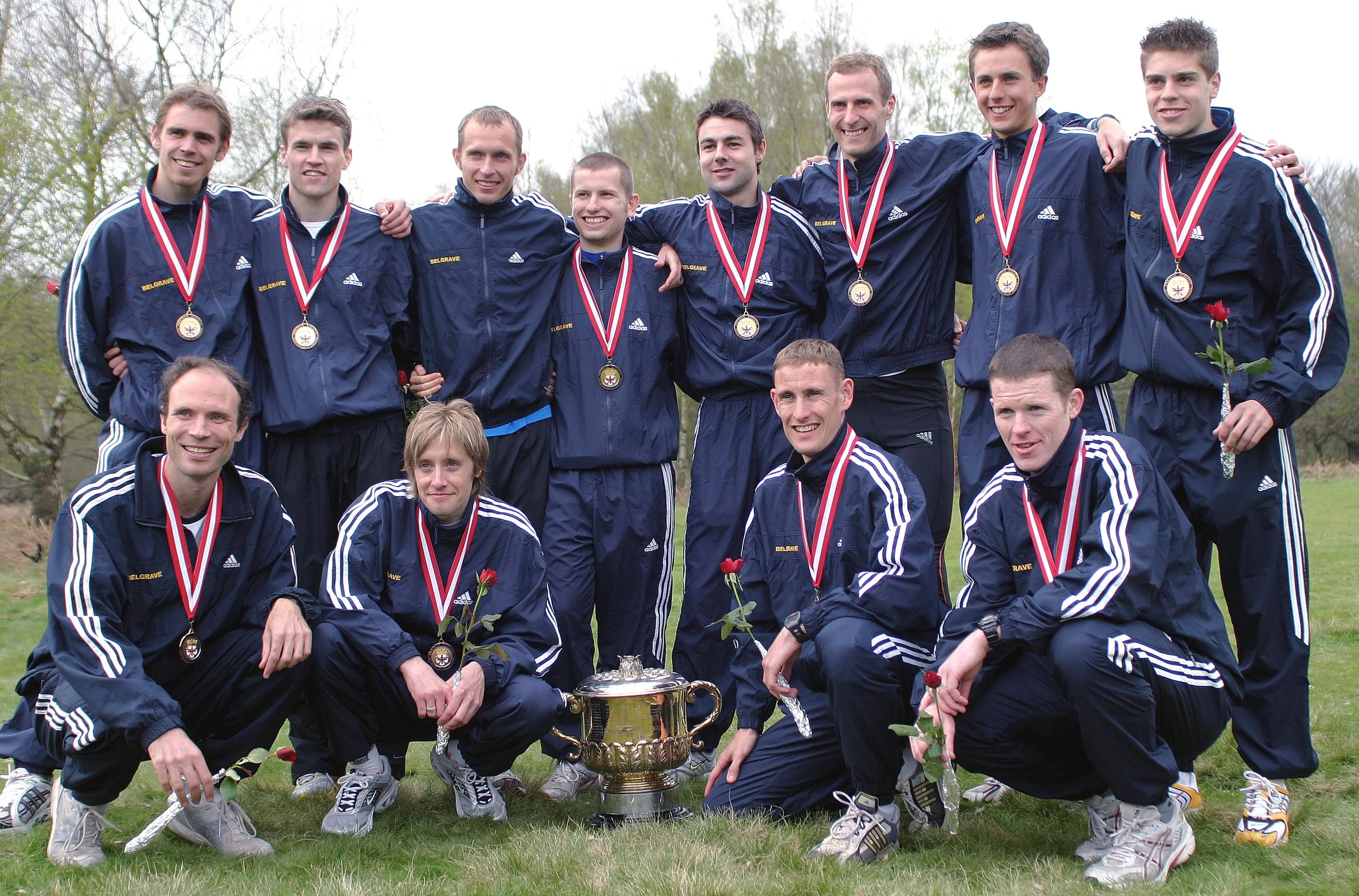
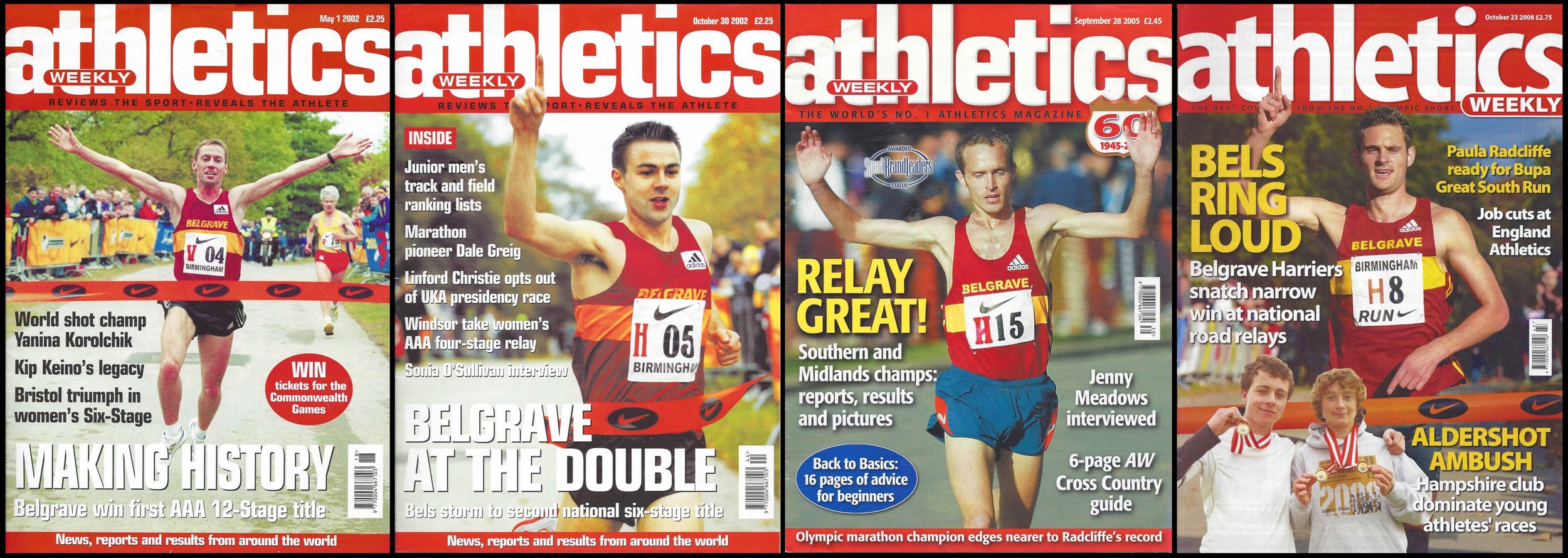
From the late 1990s Belgrave was a force on every surface. On the track, the men won the British Athletics League eight years in a row from 1997 to 2004, and again in 2006. In 1999 they won all four relays at the European Champion Clubs Relays. Darren Campbell won Olympic silver in 2000, and Phillips Idowu and Goldie Sayers won medals in 2008 (Sayers's bronze was awarded in 2016, after a rival's retest).
Behind the track team stood Sir Eddie Kulukundis, the club's patron for 25 years. In the years before National Lottery funding, he paid to help talented young athletes across British sport, not just at Belgrave, and his support helped make the club one of the strongest in Europe. Letters to Athletics Weekly grumbled about "cheque-book athletics", even aimed at the road and cross country team, which he didn't fund.
On the road and the country, the men's team was managed by Alan Mead, today the club's historian and membership secretary, 68 years after he first joined as a 14-year-old in 1958. He took it on in the 1990s, during a barren patch, and over the next 17 years his teams won almost everything on offer: the National Six-Stage Road Relay seven times, the National 12-Stage four times, and the English cross country title in 2004. The club has called it the most successful men's team in the country in that time.
That same year, 2004, Birhan Dagne became the first Belgravian, man or woman, to win the senior English cross country title.
The run wound down in the early 2010s. The track team's last British League title came in 2006, and the men's last national relay title of the era was the 12-stage road relay in 2009.
2010–2020: Individual stars
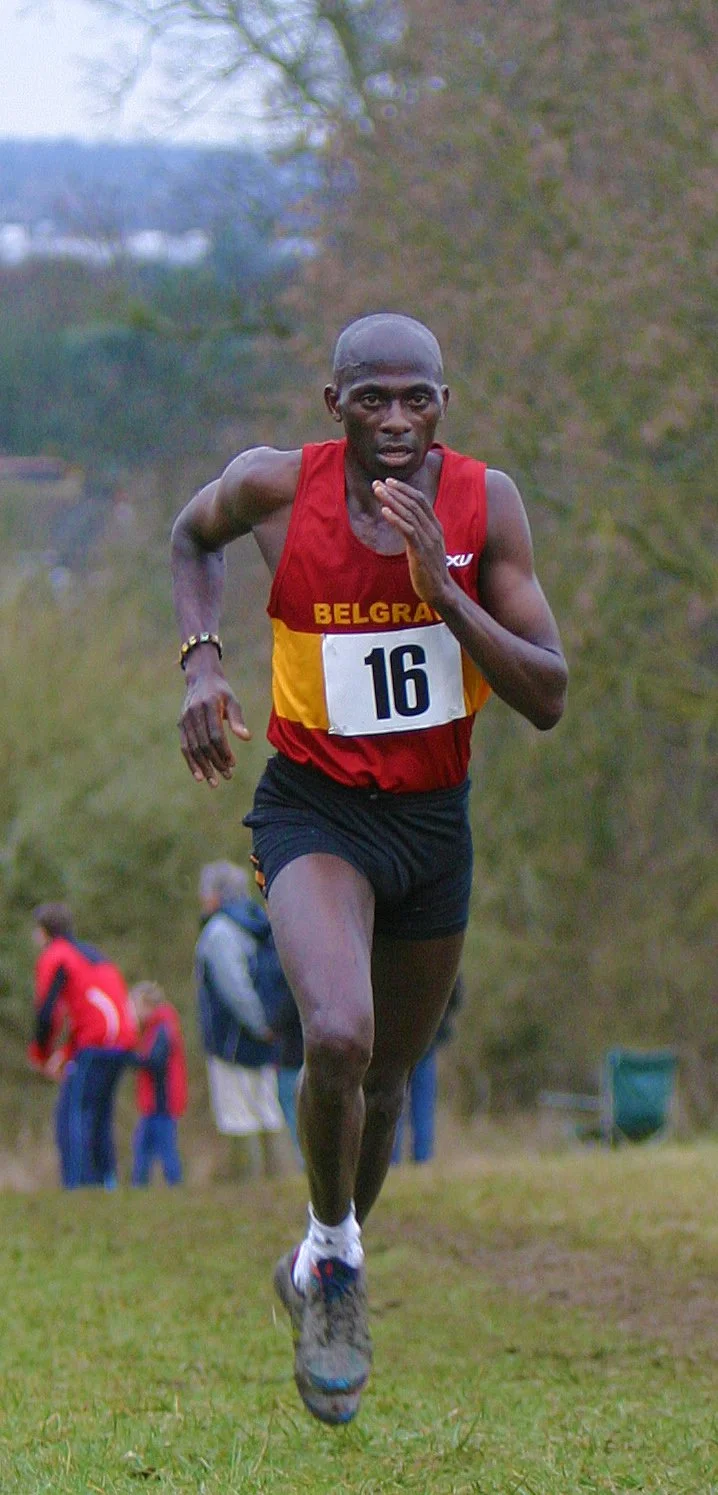
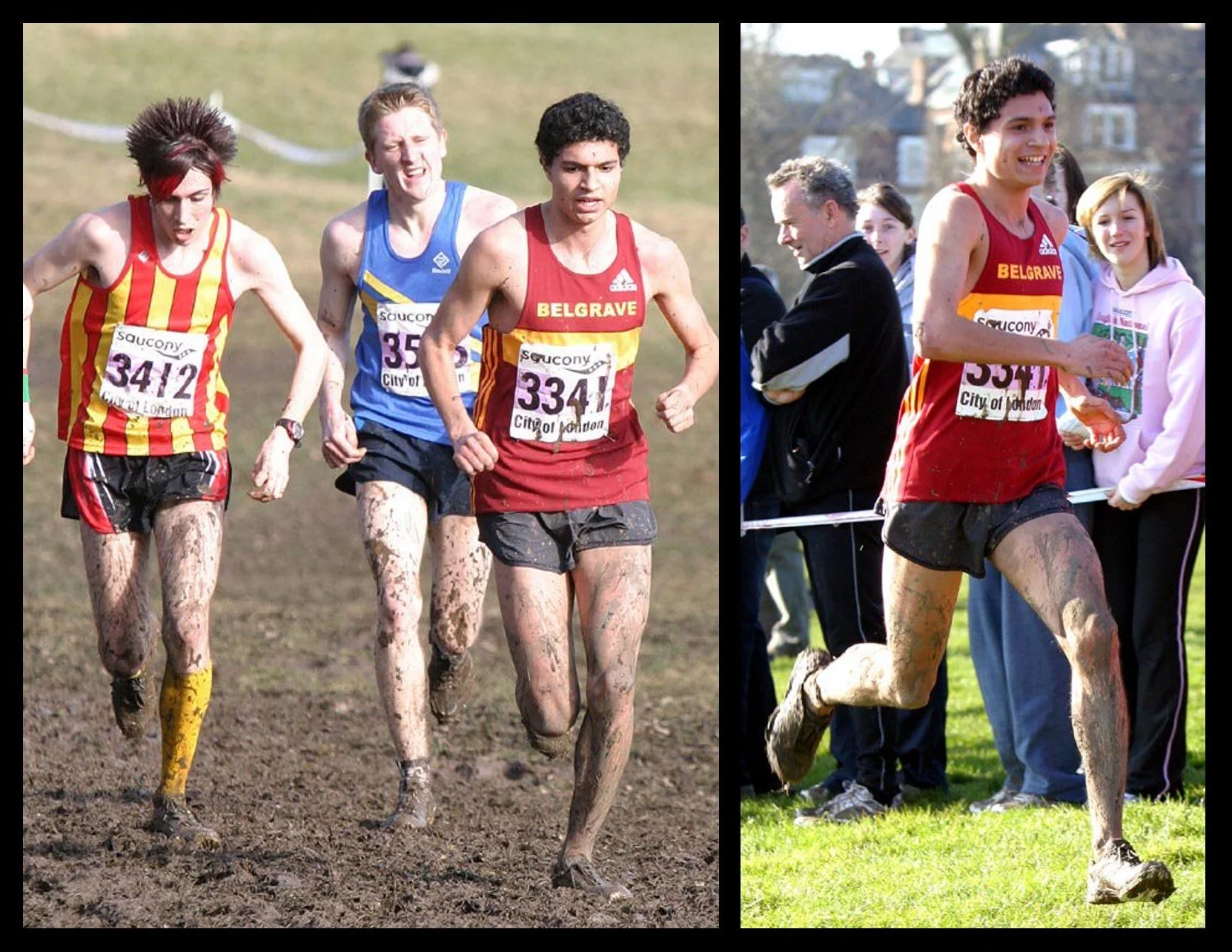
In the 2010s Belgrave's headlines came more from individual stars than from team titles.
Paskar Owor, who had run the 800 metres for Uganda at two Olympic Games, became the dominant runner in the Surrey Cross Country League. He won its individual title, the Mitchell Cup, six times between 2010 and 2016.
Tish Jones kept getting faster over the marathon. In 2019 she ran 2:31:00 in London, the second British woman home, and qualified for the World Championships in Doha. And in February 2020 Nick Goolab broke the British 5km road record in Monaco, running 13:27 in a race where the winner set a world record.
Today: The Belles lead the way
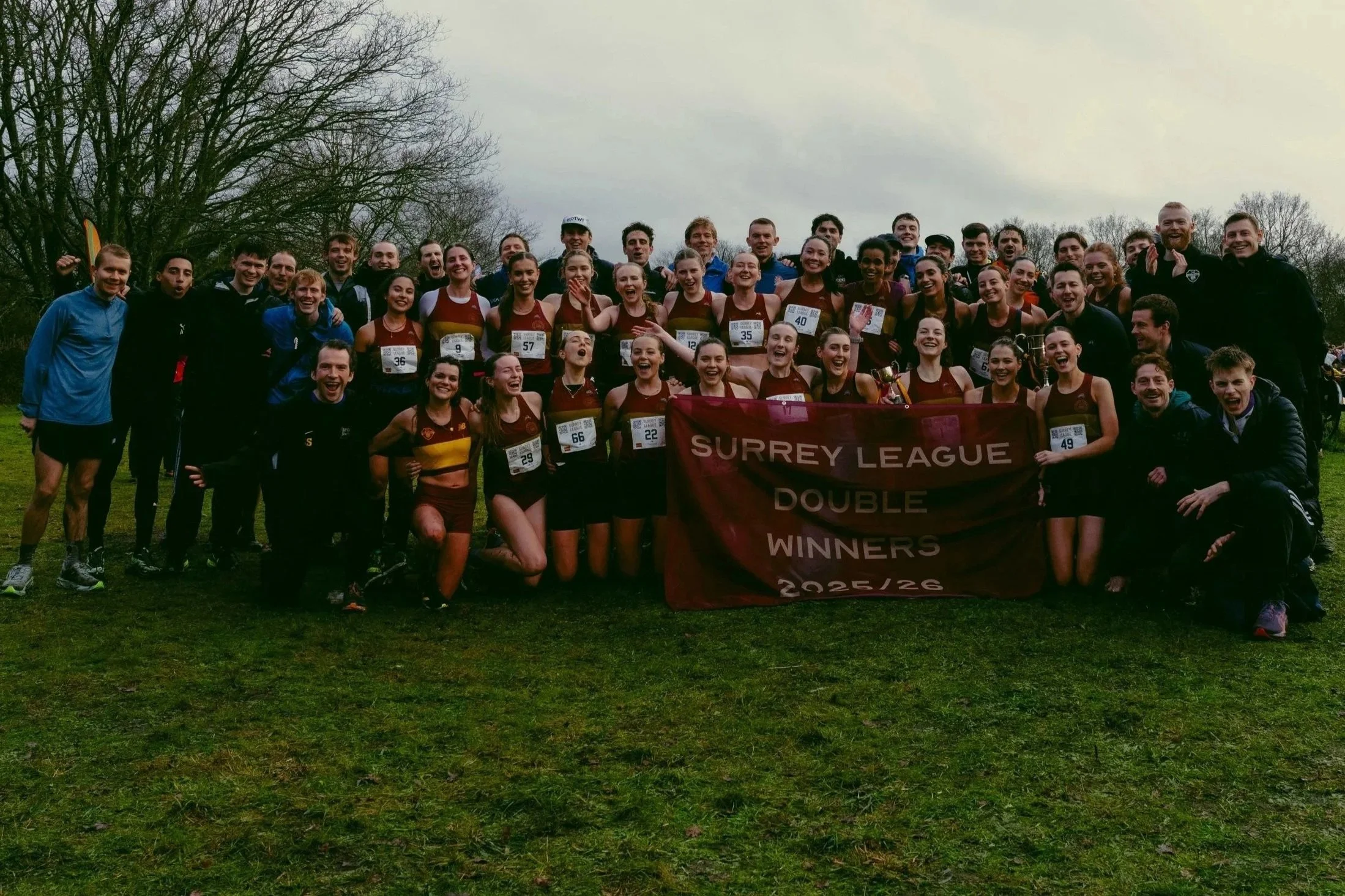
Men and women celebrate a Surrey League cross country double on Wimbledon Common, February 2026.
In 2023 Sarah Astin won the English cross country title, and since then the women's team, known as the Belles, has won a national title every year: the national cross country relays in 2023, 2024 and 2025, and the national six-stage road relay in 2026. In 2024 Georgia Bell won Olympic bronze over 1500 metres.
Running boomed during the pandemic, and Battersea Park, the club's home, is now widely seen as the home of endurance running in London: on a training run there you're very likely to pass an Olympian or two. The men's cross country team has risen with it. In February 2026 they won the Surrey League for the first time in 24 years, while the women won their third title in a row. It was only the second men's and women's double in the league's history.
The club still races in claret and gold, still runs the Bridges circuit, and still competes on the commons where its founders chased paper trails in 1887.
Read the full story
This page only scratches the surface. The club's history from 1887 to 1913 was first researched by Clive Shippen, and has been edited and carried on by Belgrave historian Alan Mead, club President in 2025/26. His archive at belgraveharriers.info tells it in full, with biographies, team honours, the Roll of Honour and well over a hundred photographs.
Photos courtesy of Alan Mead and the Belgrave Harriers archive at belgraveharriers.info, unless stated.