
Visual identity
This page tells the story of our colours, kit and crests for anyone making something for the club.
Claret and gold
Belgrave Harriers have raced in claret and gold since 1904, although our history goes back a little further than that.
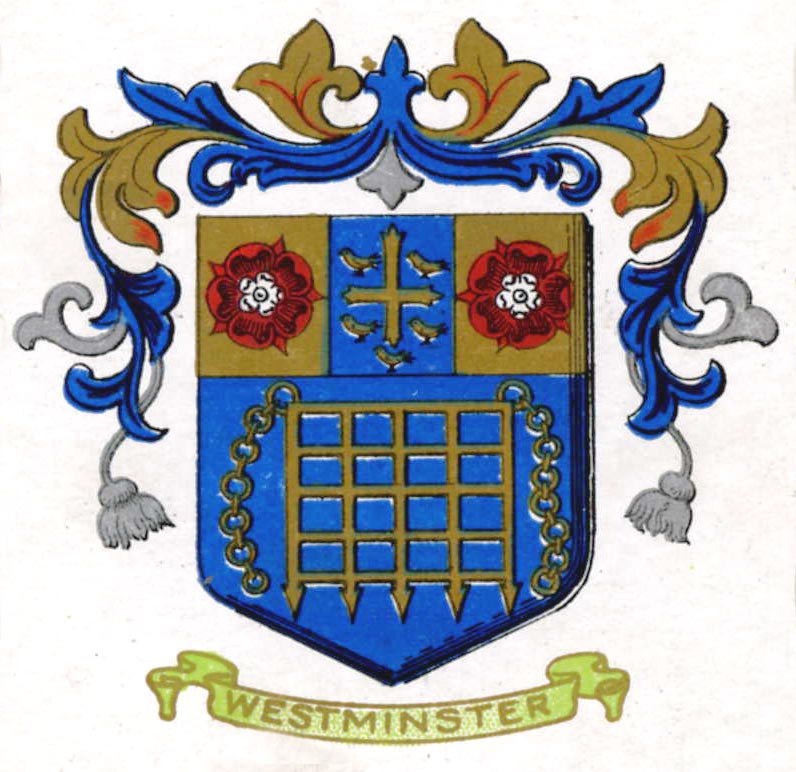
A clue in the portcullis
For a club now known for claret and gold, the first sixteen years are a puzzle. The founding colours were written down as dark and light blue, and nothing survives to prove it either way.
In support of the blue, though, is the coat of arms of the City of Westminster, from which our crest’s portcullis was taken. Westminster is home to Belgravia and to the club’s founding on the north bank of the Thames.
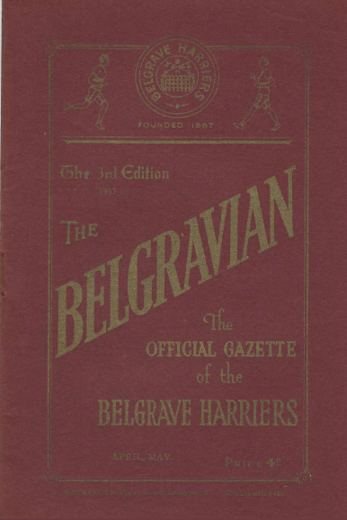
Gold on claret, ninety years ago
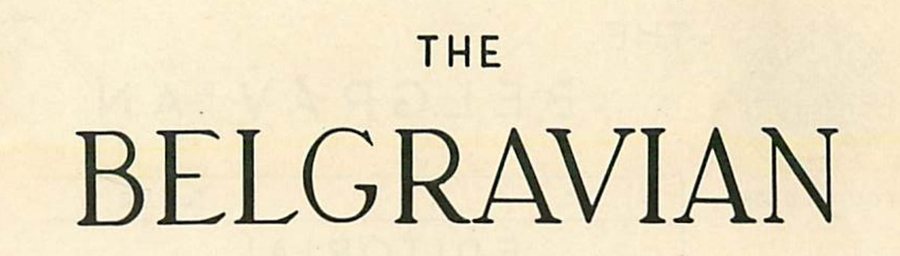
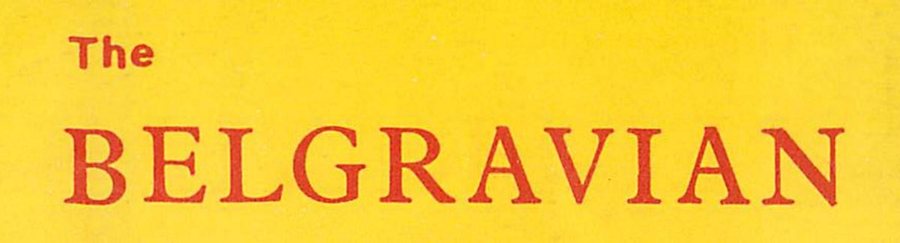
The Belgravian, the club’s own gazette, was printed on claret card from 1928 to 1939. In the early 1930s its title and crest were printed in gold ink. It is the same pairing we use to this day.
Measured from a faded scan, the card is in the same claret family as our kit and screen colours.
Cross keys and portcullis
Club rules state that the badge shall be Cross Keys and Portcullis. Since 1887 it has been drawn inside a circle, a wreath and a shield.
The roundel through the years
The badge was settled at the club’s inaugural meeting in 1887: a portcullis from the arms of the City of Westminster, with the motto Semper Paratus. By the early 1900s it had moved inside a ring lettered BELGRAVE HARRIERS, and that roundel has been redrawn by each generation since.
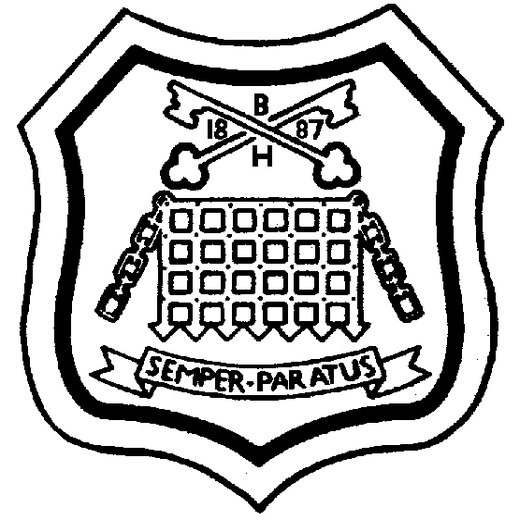
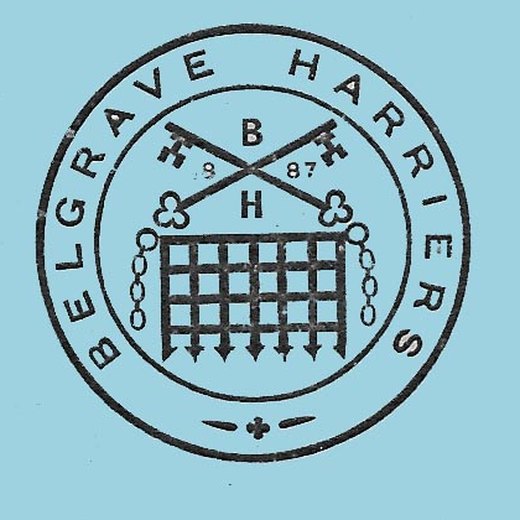
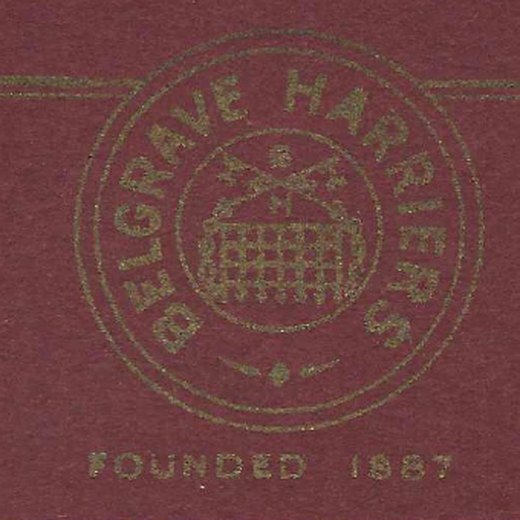
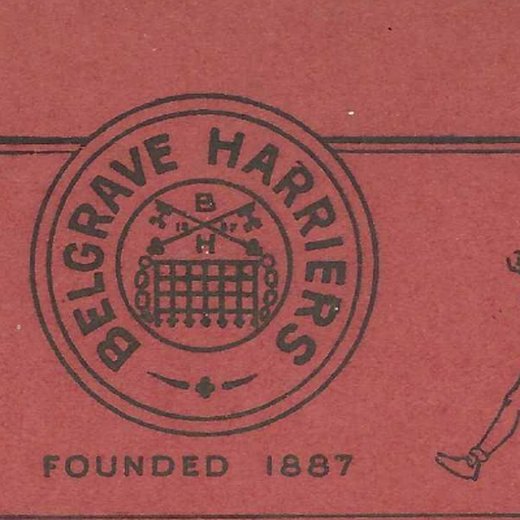
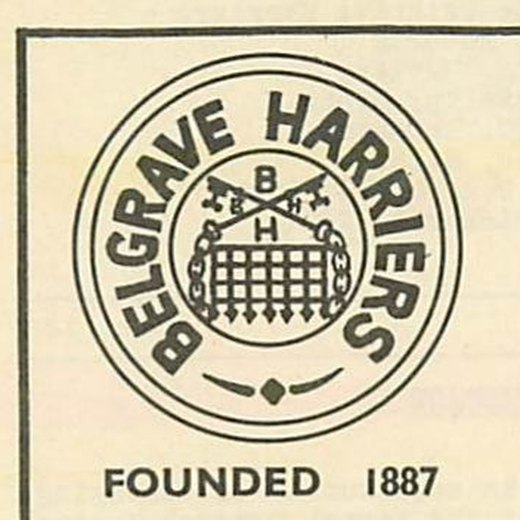
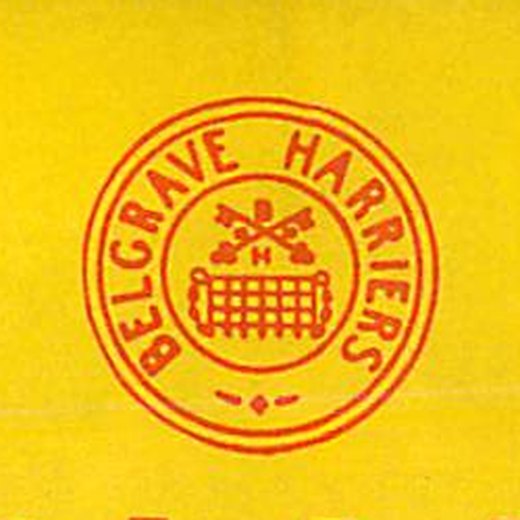
1880s badge and 1902–03 cover from belgraveharriers.info. Gazette scans from The Belgravian archive.
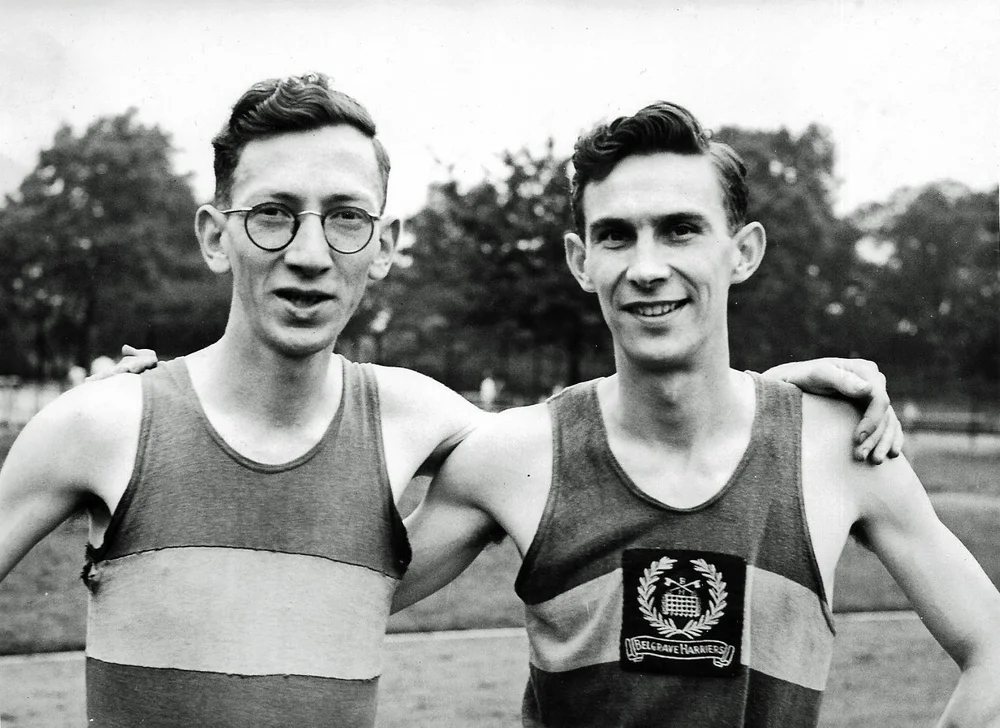
The wreath
The wreath version of the crest is awarded to club champions.
The keys on their own
For small spaces, such as today’s shorts, the crossed keys are used without the ring.
Lettering from The Belgravian
Our headlines are set in Castoro Belgrave, a typeface adapted from the open-source Castoro and redrawn towards the 1960s mastheads of the club gazette.
The look of Belgravia
By May 1960 the gazette’s title was set in inscriptional capitals, the kind you see engraved on brass plates and honours boards. It is also a look that belongs to Belgravia, the London district whose name the club shares.
Castoro Belgrave
Castoro is an open-source serif, close in spirit to the 1960 masthead, redrawn towards the gazette.
There are two Titling cuts of tall capitals for page titles and big moments: Titling Light, matched to the May 1960 cover, and Titling, matched to August 1966. The heavier weights set headlines, where they need to stand out from the text beneath.
A low crossbar, about a quarter of the way up, measured from the 1960 cover.
A middle bar that ends square, with no serif.
A G that sits inside one oval, with only half a spur, redrawn after the 1960 G.
- Belgrave
- Headlines
- Navigation and labels
- Everything you read
- 2.BELGRAVE H 2:25:43
Castoro Belgrave Titling. Page titles, homepage features, the club name.
Castoro Belgrave. Articles, news cards, the history page.
Franklin Gothic. Menus, buttons, section labels and subheadings.
Public Sans. Body text and captions.
IBM Plex Mono. Results, times and records, set in fixed-width columns as The Belgravian printed them when it was typewritten in the 1960s and 70s.
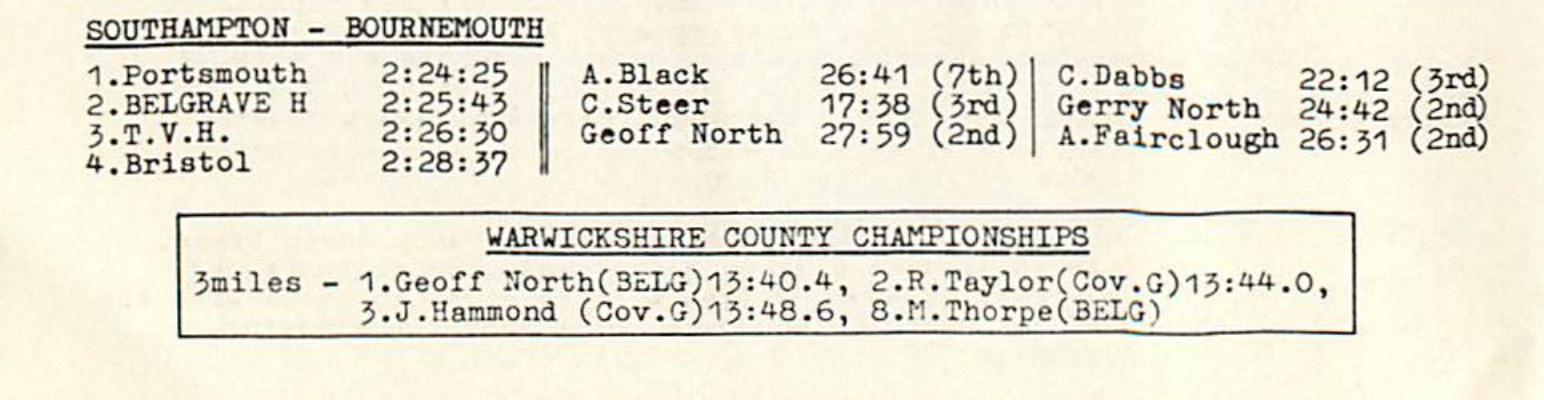
Gazette scans from The Belgravian archive, and historic photographs from Alan Mead’s archive, both at belgraveharriers.info, unless stated.
Using the identity
Kit colours
- Claret
- Pantone: 1815 c
- Hex: #7f2629
- RGB: 127, 38, 41
- CMYK: 31, 92, 74, 40
- Gold
- Pantone: 11-8 c
- Hex: #c79900
- RGB: 199, 153, 0
- CMYK: 0, 27, 100, 27
Digital colour palette
- Claret
- Hex: #7A001D
- HSL (346, 100%, 24%)
- RGB: 122, 0, 29
- CMYK: 31, 100, 77, 44
- Gold
- Hex: #D6B97A
- HSL (41, 53%, 66%)
- RGB: 214, 185, 122
- CMYK (approx.): 18, 26, 59, 2
Note that these digital colours provide greater contrast than kit colours.
Secondary golds
- Warm amber gold
- Hex: #CE954A
- HSL (34, 57%, 55%)
- RGB: 206, 149, 74
- Gold ink
- Hex: #7A5E1C
- HSL (42, 63%, 29%)
- RGB: 122, 94, 28
- For gold text and labels on white or cream
Race wear
For club competitions/fixtures, it is compulsory that all athletes wear claret and gold.
Tops. Singlets or crop tops in claret with gold hoop.
Bottoms. Split shorts, half tights or briefs in claret. Black may be used as a substitute where claret is not available.
Belgrave alt kits (not claret and gold) may not be worn for official club fixtures or competitions.
Club crest
Club rules state: The badge shall be Cross Keys and Portcullis with the motto Semper Paratus (Always Ready).
The portcullis is borrowed from the coat of arms of the City of Westminster, the London borough home to Belgravia and the founding of our club on the north bank of the Thames.
Since 1887 it has appeared in a number of variations: within a circular badge, within a wreath and within a shield.
Visual identity
Kit colours
Claret
Pantone: 1815 c
Hex: #7f2629
RGB: 127, 38, 41
CMYK: 31, 92, 74, 40
Gold
Pantone: 11-8 c
Hex: #c79900
RGB: 199, 153, 0
CMYK: 0, 27, 100, 27
Digital colour palette
Note that these digital colours provide greater contrast than kit colours.
Claret
Hex: #7A001D
HSL (346, 100%, 24%)
RGB: 122, 0, 29
CMYK: 31, 100, 77, 44
Gold
Hex: #CCAD6A
HSL (41, 49%, 61%)
RBG: 204, 173, 106
CMYK: 20, 29, 64, 6
Secondary gold tones
Light accent gold: #E0CEA6
Warmer gold: #CE954A
Race wear
For club competitions/fixtures, it is compulsory that all athletes wear claret and gold.
Tops
Singlets or crop tops in claret with gold hoop.
Bottoms
Split shorts, half tights or briefs in claret. Black may be used as a substitute where claret is not available.
Belgrave alt kits (not claret and gold) may not be worn for official club fixtures or competitions.
Club crest
Club rules state: The badge shall be Cross Keys and Portcullis with the motto Semper Paratus (Always Ready).
The portcullis is borrowed from the coat of arms of the City of Westminster, the London borough home to Belgravia and the founding of our club on the north bank of the Thames.
Since 1887 it has appeared in a number of variations: within a circular badge, within a wreath and within a shield.


